intro
Welcome to the first part of the blog series on SQL interview questions and answers! In these blogs, we will dive deep into the interview questions you are likely to receive as an applicant to a database-related position as well as provide actionable answers and advice. Join in!

Knowing your way around SQL interview questions and answers never hurts, right? In this blog, we’re going to find out the basics of such questions and the mechanics of answers behind them. In the upcoming parts of these blogs, We’re going to take a closer look at what how to prepare for SQL interviews!
The Basics of SQL Interview Questions and Answers
As with everything, even the most basic SQL interview question would depend on what kind of position you’re applying to. As not all companies are the same, interviews are also unlikely to run in the same fashion. However, you can prepare for them knowing the following in mind:
With that being said, here are the basic SQL interview questions and answers you might need to prepare for:
What are the different types of SQL queries/commands? OR What are the groups of SQL queries that developers most frequently meet in the wild?
Explanation
The different types of SQL queries/commands include all “Languages”: so DDL, DML, DCL, TCL, and DQL. In other words, they’re the Data Definition Language (everything that creates objects in a DBMS), Data Manipulation Language (anything that helps us manipulate/alter/modify data), Data Control Language (all queries that help us control the access to specific data in a database), Transaction Control Language (queries that help us control transactions in a database), and Data Query Language (queries that help us query the database itself, i.e. select data from it.) This is the most likely question you are going of “what is SQL” because your answer to this question helps the hiring manager gauge your knowledge around general things concerning the database.
What is normalization and why is it important?
Database normalization refers to not storing unnecessary data inside tables. Simply put, normalization helps organize data in such a way that reduces data redundancy. We achieve normalization by splitting tables into smaller related tables.
Explanation
This kind of question is mostly suitable for junior developers or candidates for database administrator positions that don’t have much previous database background. You are unlikely to get asked this question if you’re applying for a mid or a senior-level DBA role as this is a basic concept, however, if you want to be a junior, such a question might indeed come your way.
What are keys or indexes? What do the primary and foreign keys do in your database?
In the database world, keys are synonyms to indexes. Indexes are data structures that speed up data retrieval operations. A primary key is a unique identifier for each record in a table and a foreign key refers to a column or columns in one table that reference a primary key in another table. The purpose of a foreign key is to maintain a relationship between the two tables.
Explanation
This kind of question is intended to gauge your understanding around keys (indexes) in a database. Indexes are the one of primary ways to increase performance in database management systems.
What are the different types of JOINs and what do they do? What is the purpose of the JOIN clause?
JOIN is used to combine rows from multiple tables.
In relational databases, there are 4 types of JOIN operations:
Explanation
This question is likely to have a place in your SQL interview because JOIN operations are a good way to catch someone off-guard. These are basic questions but not knowing the answers to them may be a flag in the long run.
What is the difference between DELETE and TRUNCATE?
DELETE deletes a set amount of rows in a table and TRUNCATE truncates (deletes) all of the rows in a table. DELETE takes a WHERE clause together with itself and TRUNCATE doesn’t accept any arguments other than the table.
Explanation
Knowing the difference between the basics like DELETE and TRUNCATE is a good first step towards becoming a proficient DBA or data engineer.
What are CRUD operations and what do they do?
CRUD stands for “Create, Read, Update, Delete.”
”Create” means “insert”, “Read” means “Select”, while “Update and Delete” just mean “Update” and “Delete.”
In other terms, these operations refer to four data creation, manipulation, and deletion SQL queries with them being INSERT for data creation, SELECT for data reading, UPDATE for updating data, and DELETE for deleting rows.
Explanation
This is an old-school classic. Knowing your way around CRUD operations is a good way to start your career as a DBA or a developer as these commands are prevalent everywhere you go.
SQL Interview Question
What are the different types of SQL queries/commands? OR What are the groups of SQL queries that developers most frequently meet in the wild?
SQL Interview Answer
Explanation
The different types of SQL queries/commands include all “Languages”: so DDL, DML, DCL, TCL, and DQL. In other words, they’re the Data Definition Language (everything that creates objects in a DBMS), Data Manipulation Language (anything that helps us manipulate/alter/modify data), Data Control Language (all queries that help us control the access to specific data in a database), Transaction Control Language (queries that help us control transactions in a database), and Data Query Language (queries that help us query the database itself, i.e. select data from it.)
This is the most likely question you are going of “what is SQL” because your answer to this question helps the hiring manager gauge your knowledge around general things concerning the database.
SQL Interview Question
What is normalization and why is it important?
SQL Interview Answer
Database normalization refers to not storing unnecessary data inside tables. Simply put, normalization helps organize data in such a way that reduces data redundancy. We achieve normalization by splitting tables into smaller related tables.
Explanation
This kind of question is mostly suitable for junior developers or candidates for database administrator positions that don’t have much previous database background. You are unlikely to get asked this question if you’re applying for a mid or a senior-level DBA role as this is a basic concept, however, if you want to be a junior, such a question might indeed come your way.
SQL Interview Question
What are keys or indexes? What do the primary and foreign keys do in your database?
SQL Interview Answer
In the database world, keys are synonyms to indexes. Indexes are data structures that speed up data retrieval operations. A primary key is a unique identifier for each record in a table and a foreign key refers to a column or columns in one table that reference a primary key in another table. The purpose of a foreign key is to maintain a relationship between the two tables.
Explanation
This kind of question is intended to gauge your understanding around keys (indexes) in a database. Indexes are the one of primary ways to increase performance in database management systems.
SQL Interview Question
What are the different types of JOINs and what do they do? What is the purpose of the JOIN clause?
SQL Interview Answer
JOIN is used to combine rows from multiple tables. In relational databases, there are 4 types of JOIN operations:
Explanation
This question is likely to have a place in your SQL interview because JOIN operations are a good way to catch someone off-guard. These are basic questions but not knowing the answers to them may be a flag in the long run.
SQL Interview Question
What is the difference between DELETE and TRUNCATE?
SQL Interview Answer
DELETE deletes a set amount of rows in a table and TRUNCATE truncates (deletes) all of the rows in a table. DELETE takes a WHERE clause together with itself and TRUNCATE doesn’t accept any arguments other than the table.
Explanation
Knowing the difference between the basics like DELETE and TRUNCATE is a good first step towards becoming a proficient DBA or data engineer.
SQL Interview Question
What are CRUD operations and what do they do?
SQL Interview Answer
CRUD stands for “Create, Read, Update, Delete.”
”Create” means “insert”, “Read” means “Select”, while “Update and Delete” just mean “Update” and “Delete.”
In other terms, these operations refer to four data creation, manipulation, and deletion SQL queries with them being INSERT for data creation, SELECT for data reading, UPDATE for updating data, and DELETE for deleting rows.
Explanation
This is an old-school classic. Knowing your way around CRUD operations is a good way to start your career as a DBA or a developer as these commands are prevalent everywhere you go.
Knowing your way around these SQL interview questions will make your life easier. These are not all questions you need to be aware of but if you look closely, we have provided some questions in a way that spans multiple questions in one.
For example question #3 asks you two questions: you have what are keys or indexes? (one question) AND what do the primary and foreign keys do in your database? (that’s a second question.) We have done that with a purpose in mind: many of the questions in the database realm can be spun around and asked in a variety of different ways and answers to them can be provided in multiple ways as well.
The Thought Process for Answering an SQL Interview Question
Imagine I’m the guy you’re interviewing with for a MySQL DBA role and I ask you a simple question: define injection. Your thought process?
Simple, right? Most of the questions you’re given can be deducted in a very similar manner. Start from the bottom, move towards the top, and you will arrive at your destination fairly quickly.
SQL Clients and DbVisualizer
SQL interview questions and answers mostly consist of problems of interest to developers, database administrators, and other types of engineers. Problems need solutions and DbVisualizer is a great way to solve most of your SQL problems regardless of where they would originate.
DbVisualizer supports a whole bunch of data sources so you’re sure to find what works for you and once you find your database in question, its extensive features will help you alleviate performance or security issues. If you don’t have any, you’re free to run a couple of SQL queries using the SQL client:
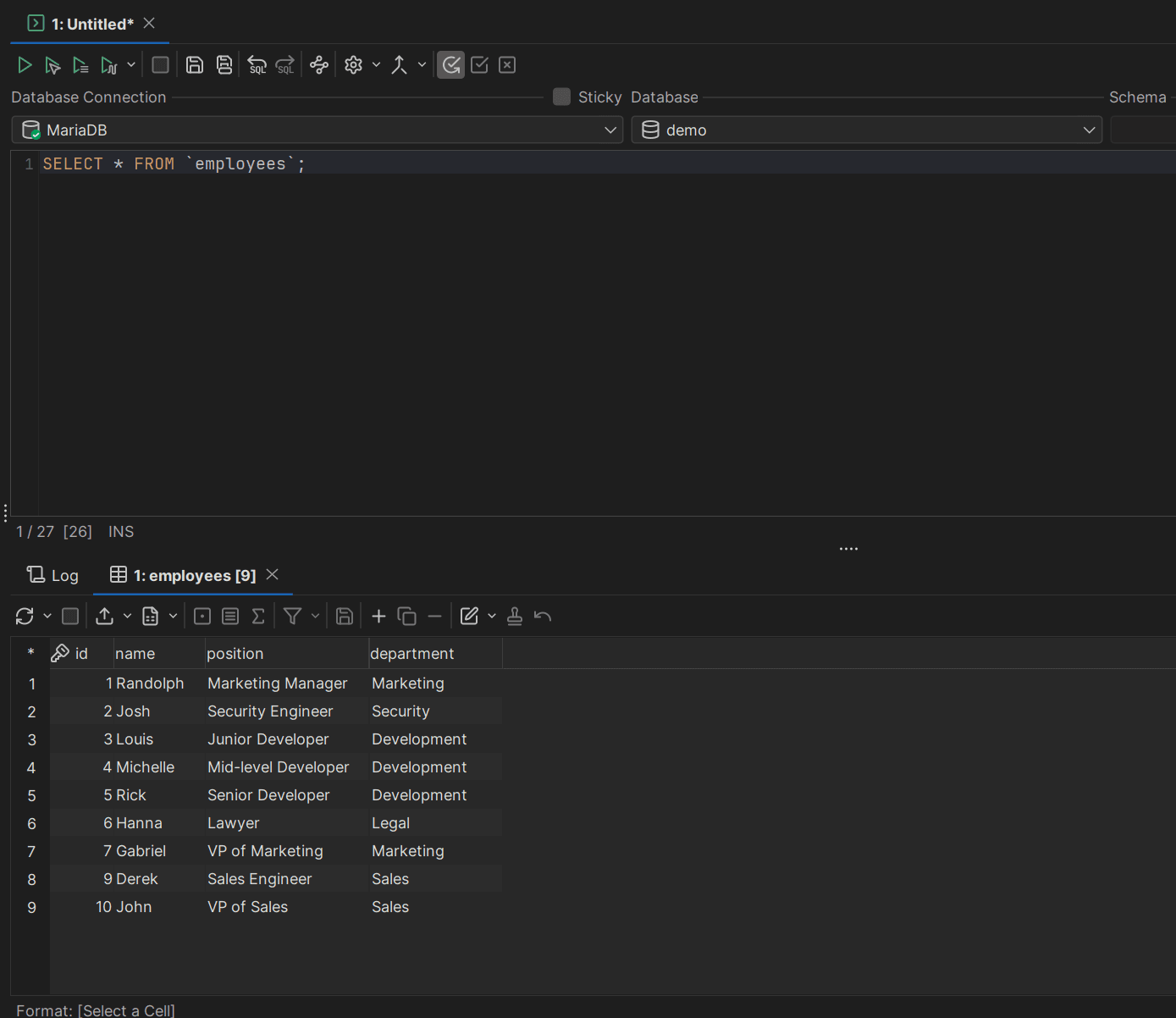
Give DbVisualizer a whirl for free for 21 days and you will quickly see these answers to these SQL interview questions materialize.
Summary
This blog has walked you through a bunch of SQL interview questions you should keep in mind for your next developer or DBA interview. Regardless of what role you might find yourself interviewing for, keep in mind that these kinds of SQL interview questions only pave the way for the most basic of SQL riddles. Keep an eye out for the second part of this blog and until next time!