intro
HIPAA certification is a designation that indicates that an organization related to healthcare has undergone sufficient audits to meet the HIPAA act for patient data protection. Learn more about it in this blog.

If you’ve ever dealt with health-related information, you’ve surely heard about the Health Insurance Portability and Accountability Act, or HIPAA for short. If you’ve heard about HIPAA, us saying that there is a HIPAA certification shouldn’t be anything new either. HIPAA compliance ensures that an organization is sufficiently equipped to protect data relating to patients, but in order for your organization to be HIPAA certified, it’s important to think about a variety of things, including your database!
HIPAA Certification Considerations
When thinking about the HIPAA certification, it’s important to consider all sides of it. Since some of the main challenges for organizations getting HIPAA certified include monitoring and controlling access to data as well as safely integrating data from multiple platforms, you will surely need to consider what role is played by your database in this whole ordeal as well.
At the same time, making sure that the data inside of your database is prepared for your organization obtaining the certification isn’t that hard. The things you should keep in mind include the following:
Other Things to Consider
When thinking of getting certified, keep in mind that HIPAA compliance goes a long way beyond the database realm. Your employees need to be trained, your application needs to comply with OWASP or other security practices to ensure the code is not only clean but safe to use, and some companies may even consider employing social engineering practitioners to evaluate the stance of the company as far as social engineering is concerned.
Coming back to your database, it’s important to note that HIPAA compliance may also mean employing database or SQL clients to offload some database tasks to them. It’s likely that you won’t be able to take care of all monitoring, security, and performance tasks alone, and since using database clients like DbVisualizer will ensure that the data in your database remains secure by:
And allowing you to perform a wide variety of other actions.
Besides security, DbVisualizer will help you craft easy-to-understand SQL queries because when using the SQL client and writing the queries in the SQL commander you will have the ability to format your queries if you click Ctrl + Shift + F:
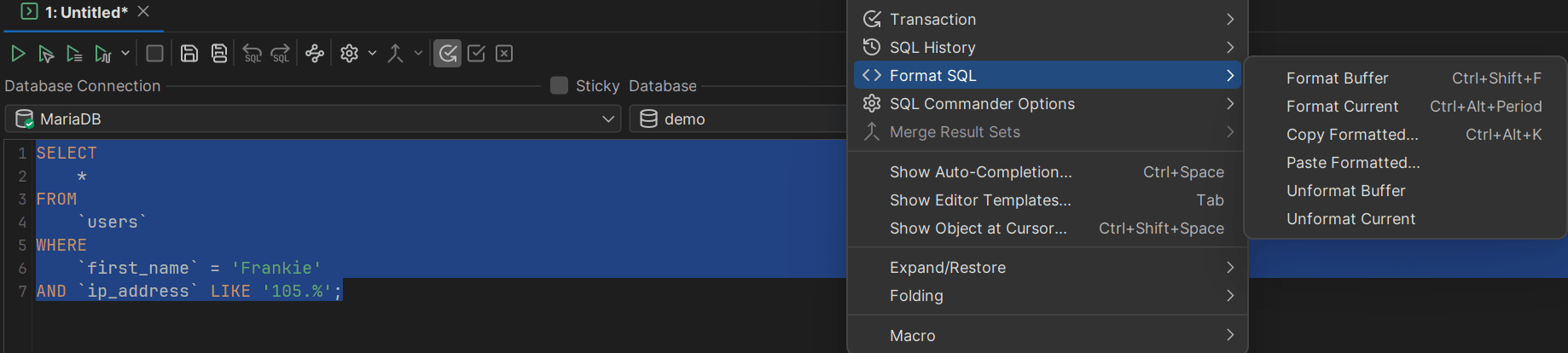
DbVisualizer has a lot of other features unique to itself, but these would be up to you to explore. Explore all of the DbVisualizer’s features today, and until next time!
Summary
HIPAA compliance is something of interest to many health-related organizations across the globe and ensuring getting HIPAA-certified in a changing data landscape is of interest to developers and DBAs alike. With DbVisualizer, adhering to HIPAA guidelines has never been easier as it’s an SQL client with security built into its every part. Try DbVisualizer for free for 21 days and see for yourself!
FAQ
What is HIPAA compliance?
HIPAA compliance is a set of practices relevant to healthcare organizations, clinics, and the like. Getting a certification for it ensures that an organization related to healthcare has undergone sufficient audits to meet the HIPAA act for patient data protection.
How can DbVisualizer help with achieving HIPAA compliance?
DbVisualizer isn’t a certification tool, however, it can help with securing your data since it has multiple security features that should make securing data inside of relational and NoSQL databases a breeze. Give it a spin today!
Are there any tools that would help meet HIPAA goals aside from DbVisualizer?
Yes, of course. When looking into HIPAA directives, it’s important to know that there are mulitple things you should be aware of and database security is just one of them. Besides SQL clients like DbVisualizer, you may also want to take a look at data breach search engines like BreachDirectory.com that help you evaluate your stance in regards to data breaches.